A note of caution: Because of the various diseases that wild game can transmit to humans, always use caution when handling the carcass. Use rubber/latex gloves and wash your hands with soap and water after handling. Remember to contact your taxidermist prior to your hunt in order to get instructions on their caping requirements. However, the following techniques are generally acceptable.
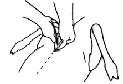
With the animal on its back, make a shallow cut through the skin below the breastbone. Start your cut away from the brisket, allowing plenty of uncut skin\for your shoulder mount. Insert two fingers of the free hand, cradling the blade, to hold the skin up. Cut straight down the belly and around the genitals, separating but not severing them from the abdominal wall. Slit the belly skin Note: Start the incision below the caping line.
Cut deeply around the rectum, being careful not to cut off or puncture the intestine. Pull to make sure the rectum is separated from tissue connecting it to the pelvic canal. Pull the rectum out and tie string tightly around it to prevent droppings from touching the meat. Lift the animal's back quarter a bit, reach into the front of the pelvic canal, and pull the intestine and connected rectum into the stomach area.
For a full shoulder mount, do not cut open the chest cavity. Cut the diaphragm away from
the ribs all the way to the backbone. In the chest cavity find the esophagus & wind pipe,
cut them off as far up as possible & pull them down through the chest. Roll the deer onto its side, grab the esophagus with one hand and the rectum with the other. Pull hard and the deer's internal organs will come out.
When field dressing a trophy to be mounted, don't cut into the brisket (chest) or neck area. If blood gets on the hide, wash it off with snow or water as soon as possible. Avoid dragging the deer out of the woods with a rope. Place it on a sled, or a four- wheeler. Rope, rocks, or a broken branch from a dead fall can easily damage the fur or puncture the hide. If you do need to drag it,, attach the rope to the base of the antlers and drag your trophy carefully. Caping is the process of skinning out a trophy animal from the head and is best left to the taxidermist. Many trophies are ruined in the first few hours after death. As soon as the animal dies, bacteria begins to attack the carcass. Warm, humid weather accelerates bacteria growth. Keep on Ice or put hide and horns in a freezer.
Skinning Life-Size Big Game- There are two major methods of skinning for a large life-size mount such as deer, elk, or bear. These methods are the flat incision and the dorsal method.
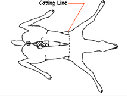
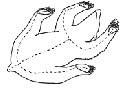
The Flat Incision- This is used for rug mounts and for a variety of poses. Make these slits (cutting the feet free from the carcass) and pull the skin off the carcass. The head is detached as with the shoulder mount. Note: Freeze after skinning or take to your taxidermist..
The Dorsal Method- This method of skinning involves a long slit down the back (from the tail base up into the neck). The carcass is skinned as it is pulled through this incision. The feet/hooves and the head are cut from the carcass as with a shoulder mount explained later. Only use this method with approval and detailed instructions from your taxidermist. Use this method only when the skin can be frozen quickly after skinning.
Caping for a Shoulder Mount- With a sharp knife, slit the hide circling the body behind the shoulder at approximately the midway point of the rib cage behind the front legs. Slit the skin around the legs just above the knees. An additional slit will be needed from the back of the leg and joining
the body cut behind the legs. Peel the skin forward up to the ears and jaw exposing the head/neck junction. Cut into the neck approximately three inches down from this junction. Circle the neck, cutting down to the spinal column. After this cut is complete, grasp the antler bases, and twist the
head off the neck. This should allow the hide to be rolled up and put in a freezer until transported to the taxidermist. These cuts should allow ample hide for the taxidermist to work with in mounting.